
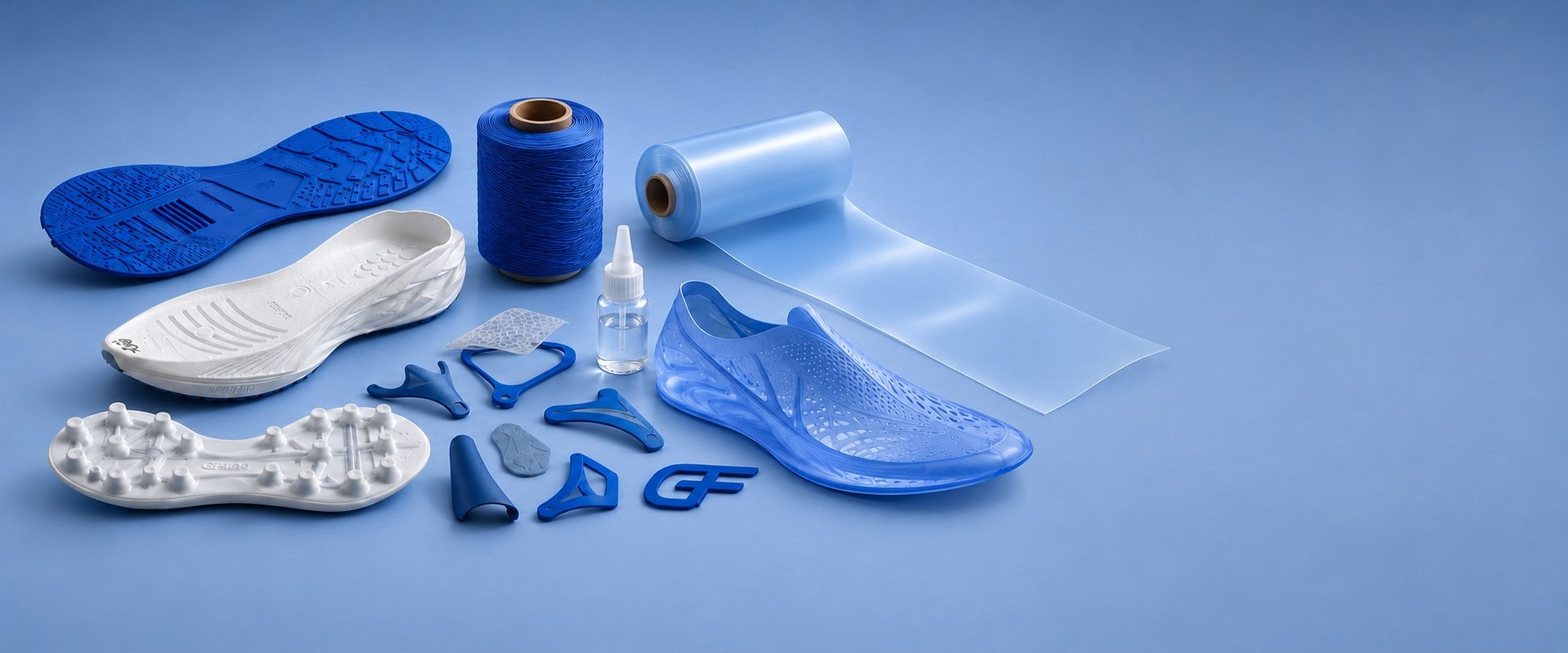
Comprehensive TPU Footwear Solution
Built for footwear factories, component suppliers and performance brands.
TPU Hot Melt
-
Solvent Adhesive
-
Injection Molding
-
Extrusion
-
Supercritical Fluid Foaming
-
TPU Hot Melt - Solvent Adhesive - Injection Molding - Extrusion - Supercritical Fluid Foaming -
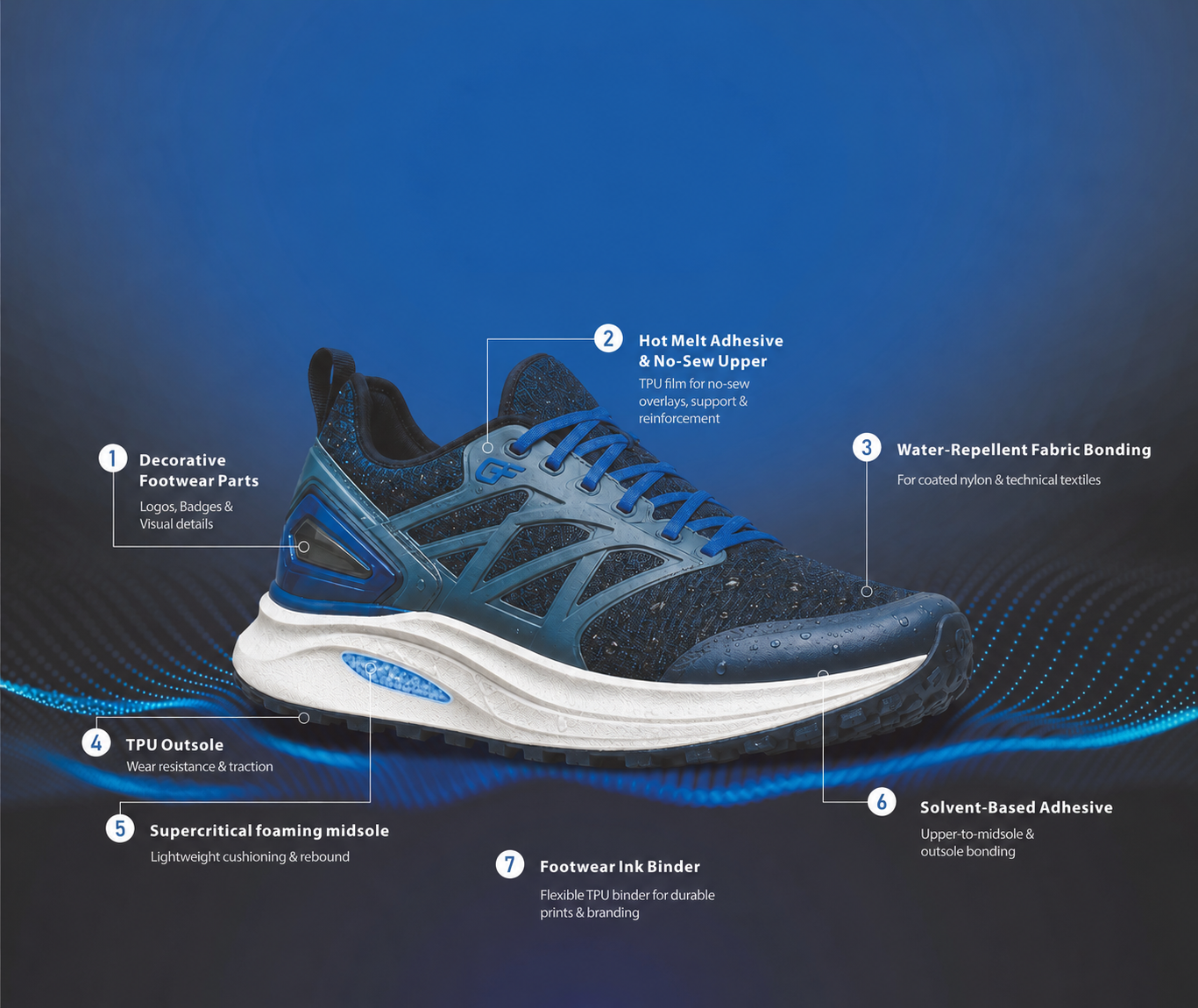
Start with the part of the shoe you need to improve
-
Footwear logos, badges, and other footwear deco
-
TPU for no-sew overlays, support reinforcement
-
Bonding Solutions developed around coated DWR nylon, mesh, and technical textile surfaces
-
Wear resistance, >100k Flex, traction controlled
-
Lightweight cushioning and rebound, polyether and non-yellowing grade available
-
Bonding for Shoe upper/Midsole/Outsole
-
Flexible TPU binder for durable prints and pains
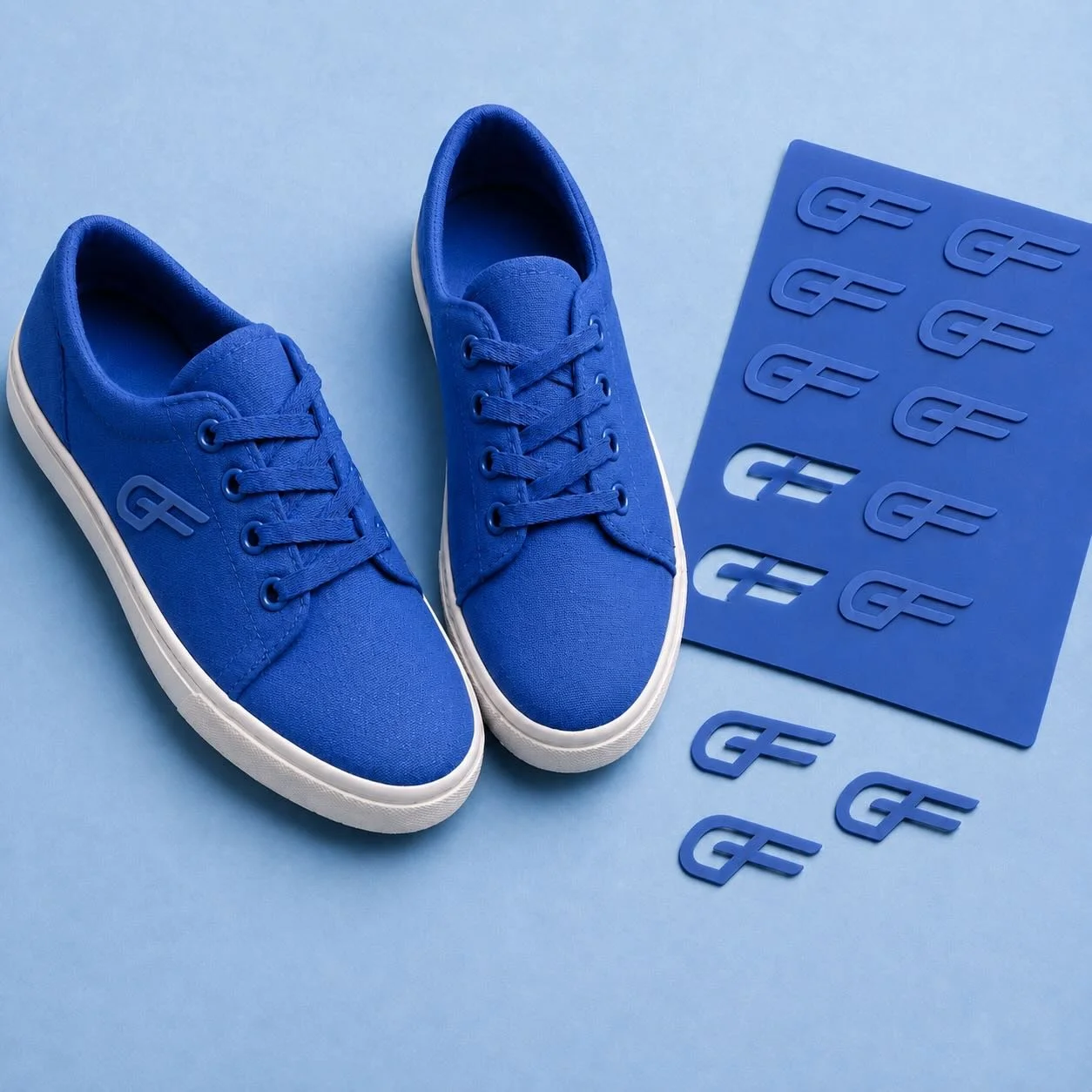
Decorative Parts Made by TPU
Common decorative parts like logo or other parts of shoes are most commonly extruded into film, and the part go through high-frequency(HF) heat sealing and cutting. The part then gets applied adhesive on the back and assembled to the shoe. Higher mechanical performance, viscosity, and heat content of the raw material enable better and more precise HF processing.
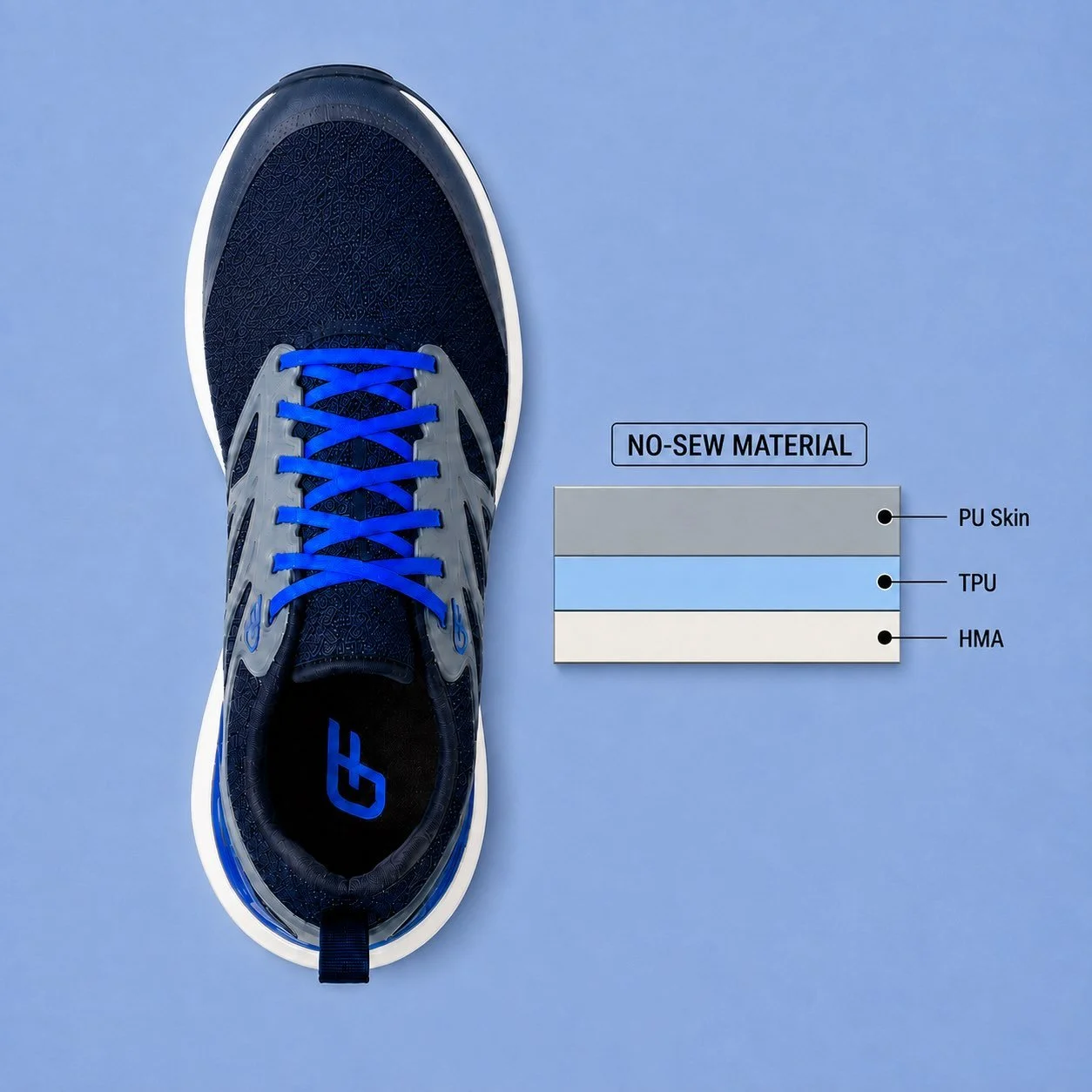
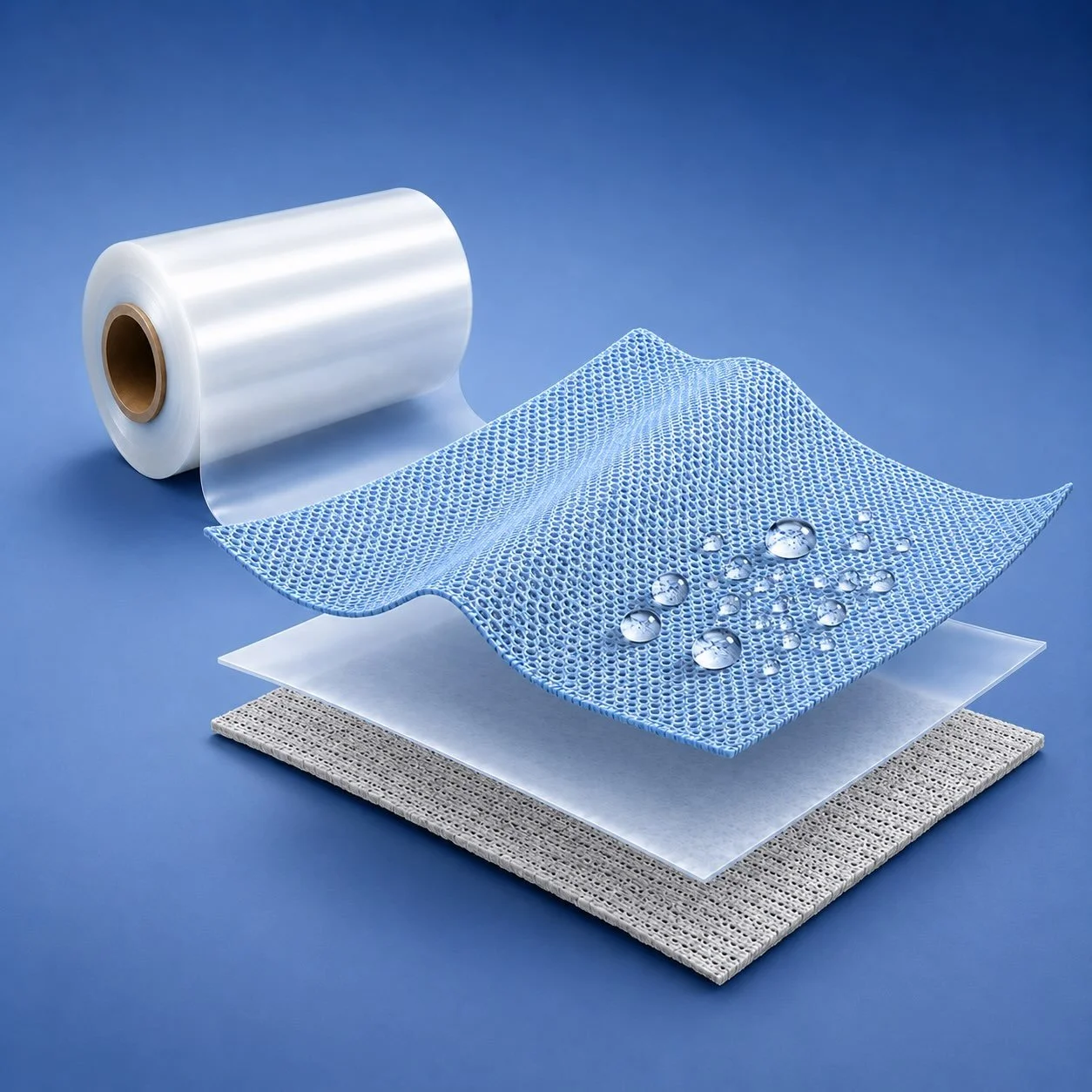
Shoe No-Sew Material Stack
This no-sew footwear construction combines durable PU skin, lightweight TPU support, and clear HMA adhesive to create seamless shoe uppers with enhanced flexibility, comfort, durability, manufacturing efficiency, and overall performance. Goaflex provides a comprehensive no-sew material solution tailored to match your target PU skin design aesthetics, surface texture, and desired tactile feel.
DWR Nylon Bonding Solution
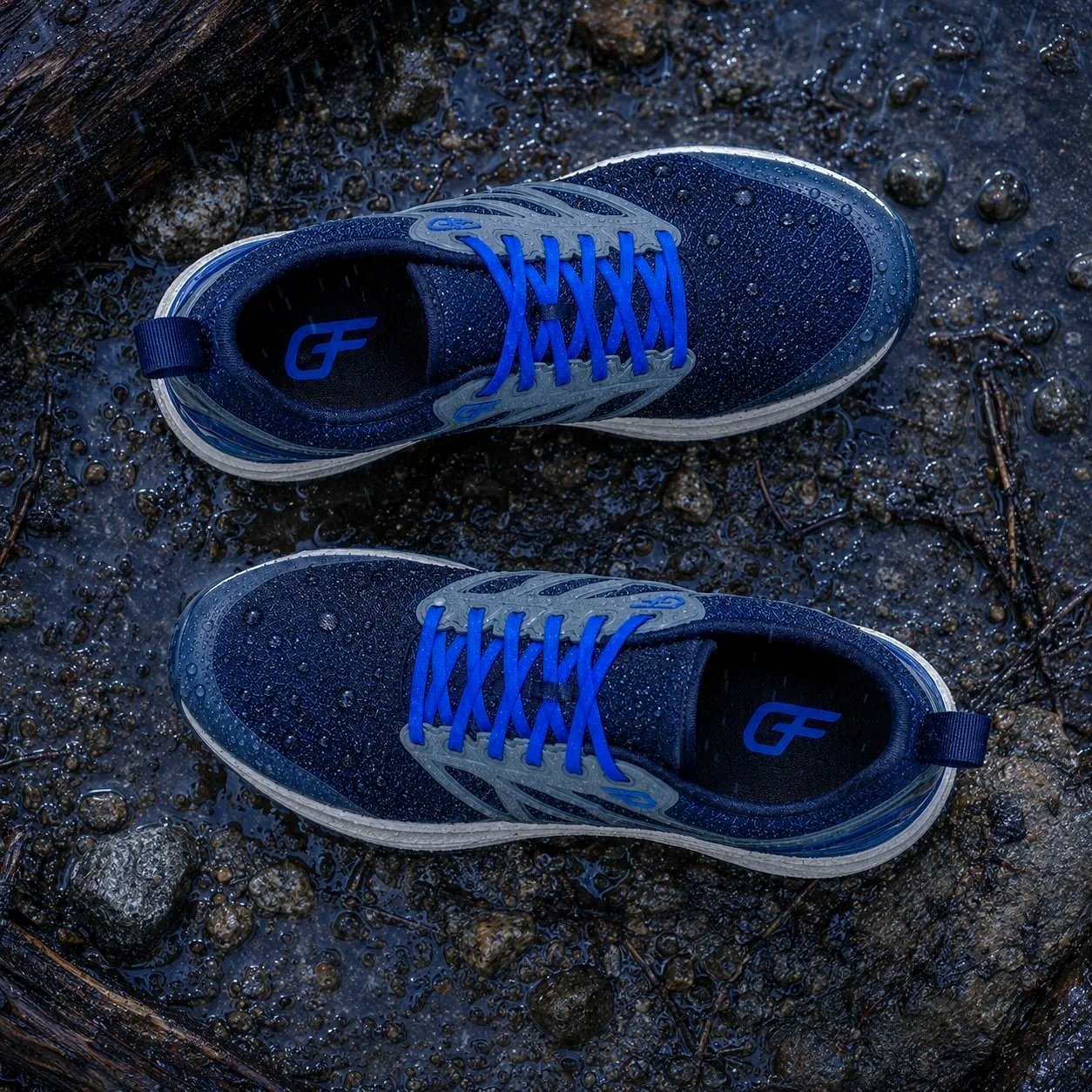
Goaflex’s specialty hot melt adhesive is engineered for reliable bonding of DWR-treated nylon in outdoor applications. It delivers strong adhesion, flexibility, and durability for waterproof apparel, technical textiles, tents, bags, and performance gear exposed to demanding weather conditions.
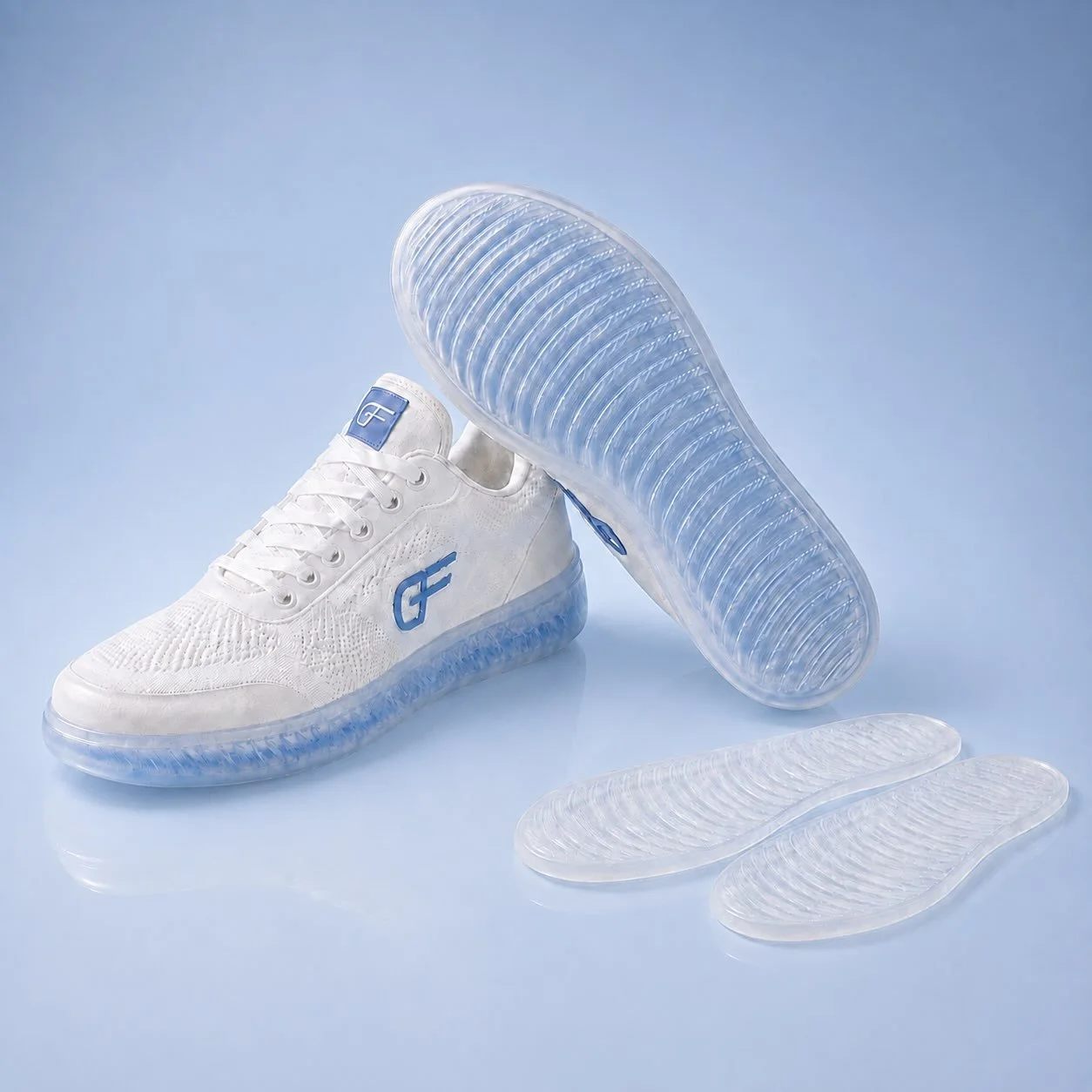
Footwear Injection Solution
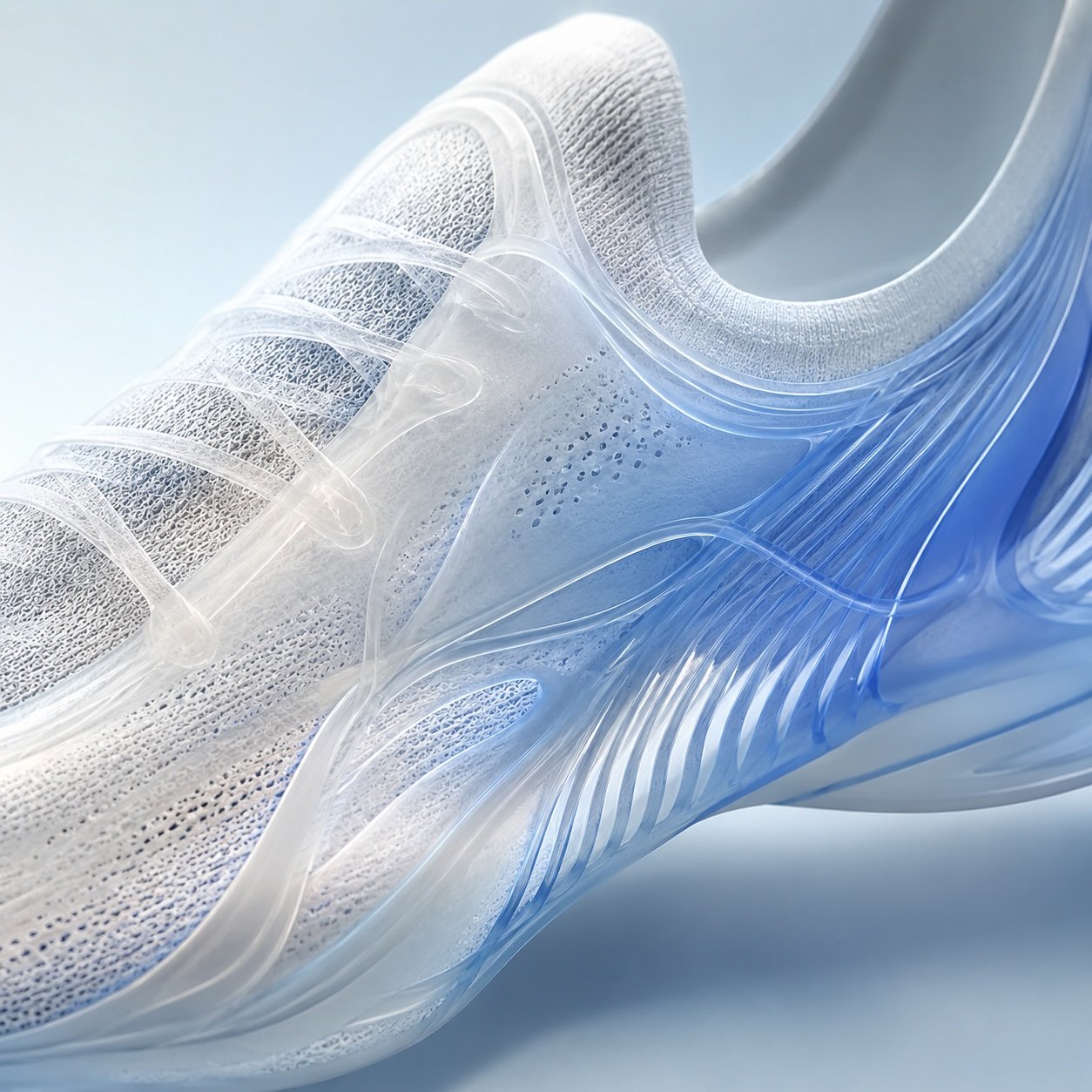
Several of the footwear key components are made with injection molding. For example, footwear deco parts, shoe outsole, translucent outsole for the sneaker, and toe cap on the heavy duty safety shoes. Our batch production and additional annealing process enables 10% higher tensile strength and better molecular microstructure.
From Footwear Concept to Production-Ready TPU

01 — Understand the Shoe Part
Start with the actual application: upper, logo, outsole, midsole, coated textile, adhesive layer, or printed surface.
Key inputs: shoe part, substrate, current material, target feel or appearance.
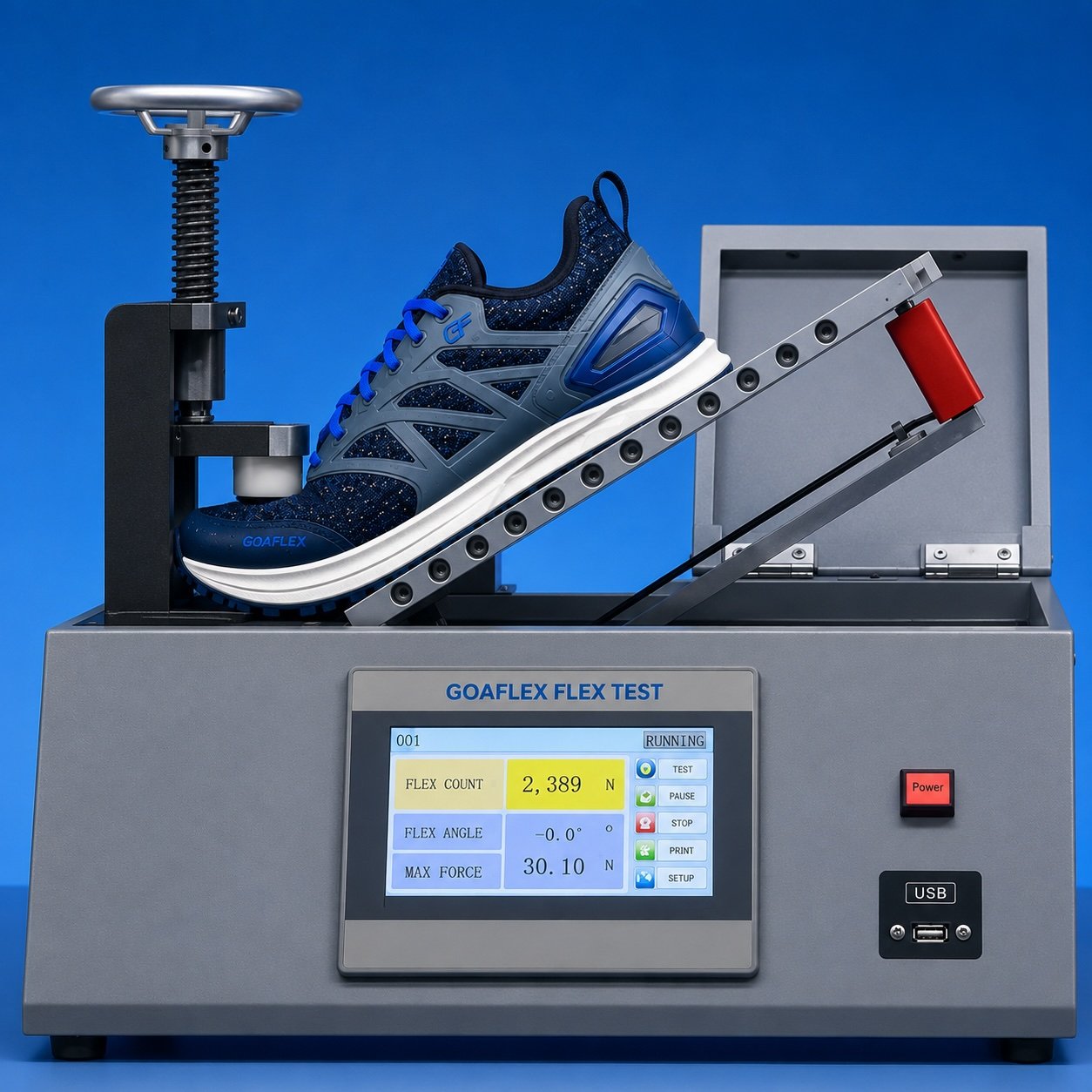
02 — Review the Process Window
TPU performance depends on how the material is processed. We review your actual production method before suggesting a grade.
Common processes: hot melt lamination, solvent-based cementing, injection molding, extrusion, supercritical foaming, ink or coating formulation.
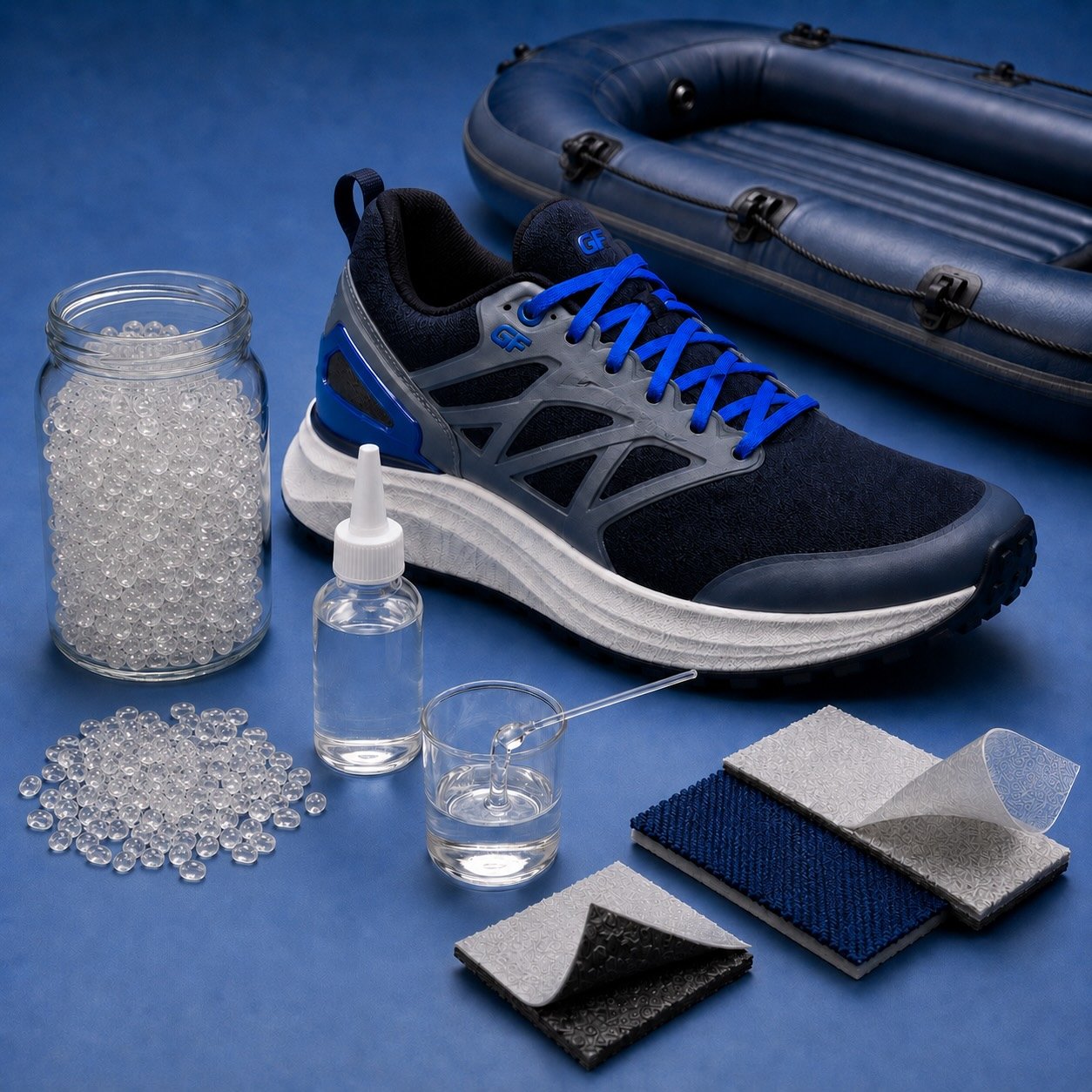
03 — Match the Material Direction
We recommend a starting TPU direction based on the required balance of bonding, flexibility, durability, flow, rebound, colorability, and finished appearance.
Material options: hot melt film, solvent-based adhesive, injection / extrusion TPU, foaming TPU, or TPU ink binder.
04 — Validate Before Scale-Up
Before mass production, we help define practical sample tests and adjustment points based on the customer’s bonding method and quality requirements.
Validation focus: peel strength, flex durability, abrasion resistance, hydrolysis resistance, heat resistance, rebound, and surface appearance.
Match TPU Properties to Footwear Requirements
Adhesion on Difficult Surfaces
Coated nylon, technical mesh, synthetic leather, EVA, rubber, and other difficult footwear substrates. Focus: activation behavior, bonding strength, open time, and water resistance.
Processing Stability
For lamination, cementing, injection, extrusion, or foaming processes that require a stable operating window. Focus: melt flow, demolding, viscosity, cycle time, and consistency.
Durability in Use
For parts exposed to repeated flexing, abrasion, heat, moisture, and long-term mechanical stress. Focus: flex resistance, hydrolysis resistance, abrasion resistance, and heat aging.
Feel & Finished Appearance
For components where touch, transparency, softness, surface quality, or color integration matters. Focus: softness, low bulk, clarity, colorability, and clean surface finish.