
TPU for Footwear: Why Thermoplastic Polyurethane Is Used in Modern Shoe Manufacturing
Quick answer
TPU for footwear is used when shoe manufacturers need a material that combines rubber-like flexibility, abrasion resistance, durability, design freedom, and thermoplastic processing. It is commonly used in outsoles, molded shoe components, TPU films, no-sew upper reinforcement, hot-melt adhesive layers, and functional footwear parts.
For footwear factories, component suppliers, and performance brands, the key is not simply choosing a TPU by hardness. The right TPU grade should match the shoe part, processing method, bonding conditions, substrate, and final performance target.
GOAFLEX develops TPU footwear solutions for injection molding, extrusion, films, hot-melt adhesive, no-sew construction, and specialized footwear applications.
In this guide
- Why TPU is used in footwear
- Where TPU is used in shoes
- TPU films, hot-melt adhesives, and no-sew construction
- Injection molding TPU for footwear components
- How footwear manufacturers should choose a TPU grade
- How GOAFLEX supports footwear TPU development
Why Is TPU Used in Footwear?
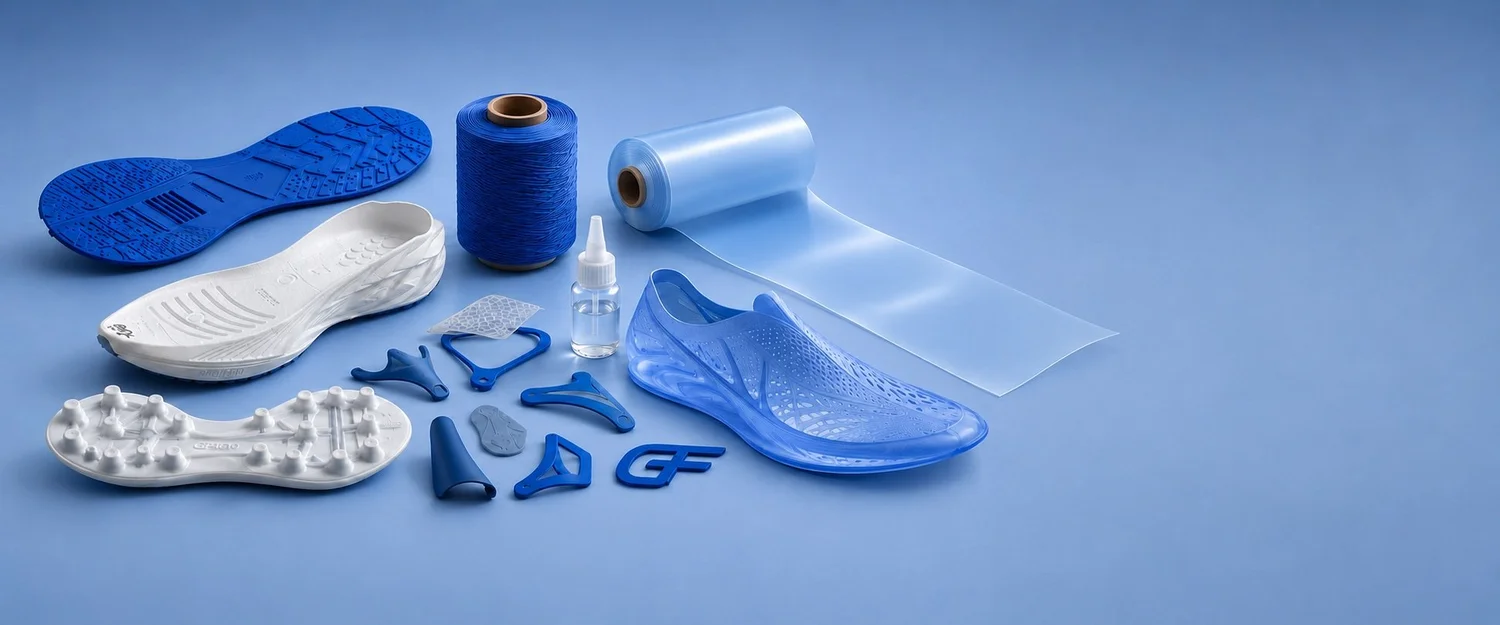
TPU, or thermoplastic polyurethane, combines characteristics commonly associated with both rubber and thermoplastics. It can provide rubber-like elasticity and flexibility while still being processed using conventional thermoplastic manufacturing methods such as injection molding, extrusion, film processing, calendering, and hot-melt processing.
Depending on the formulation, footwear TPU can offer:
- Excellent abrasion resistance
- High flexibility and elastic recovery
- Good tensile and tear strength
- A wide hardness range
- Good dimensional stability
- Reliable processing performance
- Design flexibility for transparent, colored, molded, or laminated parts
- Suitability for injection molding, extrusion, films, and adhesive systems
These characteristics allow TPU to be used in many different footwear components, from ground-contact outsoles to upper reinforcement films and bonding layers.
Where Is TPU Used in Shoes?
A modern shoe is a combination of multiple materials and components, each with different performance requirements. TPU can be engineered for several of these applications.
TPU Outsoles
The outsole is one of the most demanding parts of a shoe. It must withstand repeated ground contact, friction, bending, impact, and long-term wear.
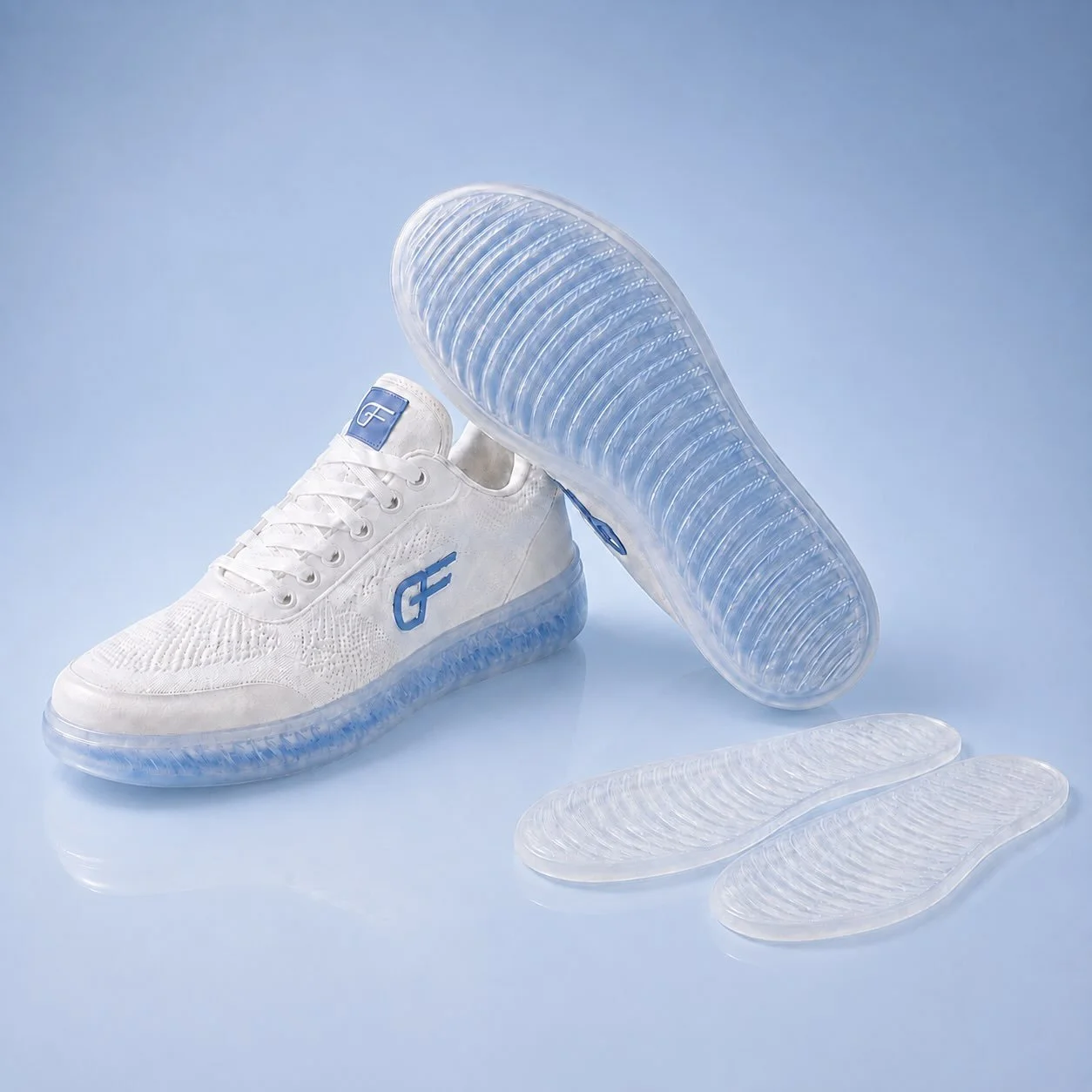
TPU can be an attractive outsole material because it can balance abrasion resistance, flexibility, mechanical strength, durability, moldability, and design detail. Injection-molded TPU also allows manufacturers to produce complex outsole geometries and detailed surface patterns.
The appropriate TPU outsole grade depends on the required hardness, wear resistance, flex durability, appearance, color, transparency, and processing conditions.
TPU Structural and Decorative Components
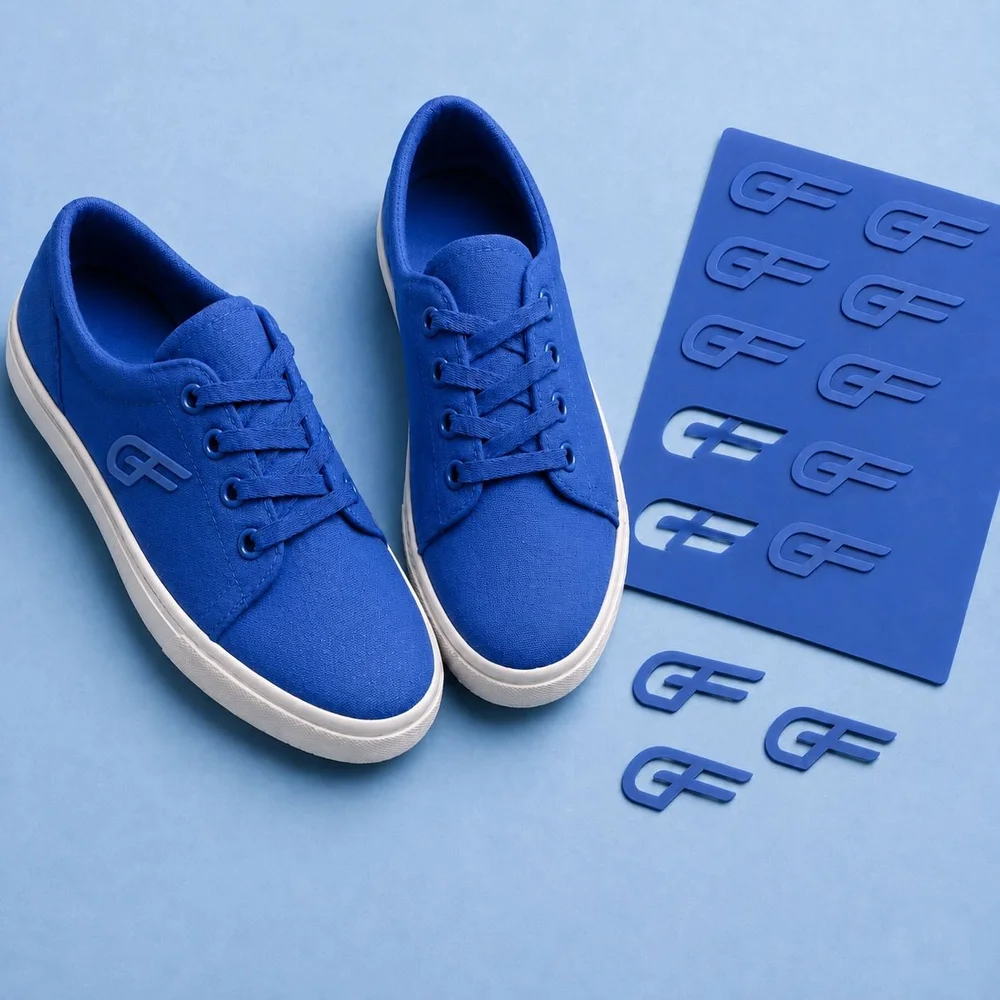
TPU can also be used for structural and reinforcement components in footwear, including heel structures, support components, reinforcement parts, frames, decorative structures, logos, and functional molded components.
For athletic and performance footwear, material selection is especially important because the component may need to provide both support and controlled flexibility. Different TPU formulations can be developed to achieve different levels of hardness, elasticity, transparency, and mechanical performance.
TPU Films for Shoe Uppers
Modern footwear design increasingly uses films and laminated structures to reduce traditional stitching and create cleaner, lighter designs. TPU films can be applied to shoe uppers for reinforcement, surface protection, decorative structures, functional layers, lamination, and no-sew applications.
TPU films can provide flexibility while maintaining good mechanical performance. They can also be engineered for different thicknesses, hardness levels, activation temperatures, clarity, hand feel, and processing conditions depending on the upper material and production process.
TPU Hot-Melt Adhesive for Footwear
Bonding is another important application of TPU in footwear manufacturing. TPU-based hot-melt adhesive materials can be used to bond different footwear layers and components.
Typical applications include shoe upper bonding, textile lamination, no-sew construction, reinforcement bonding, and functional film lamination.
The performance of a hot-melt adhesive depends on more than bond strength alone. Manufacturers should also consider activation temperature, open time, initial bonding strength, heat resistance, substrate compatibility, flexibility, and processing conditions.
TPU and No-Sew Footwear Manufacturing
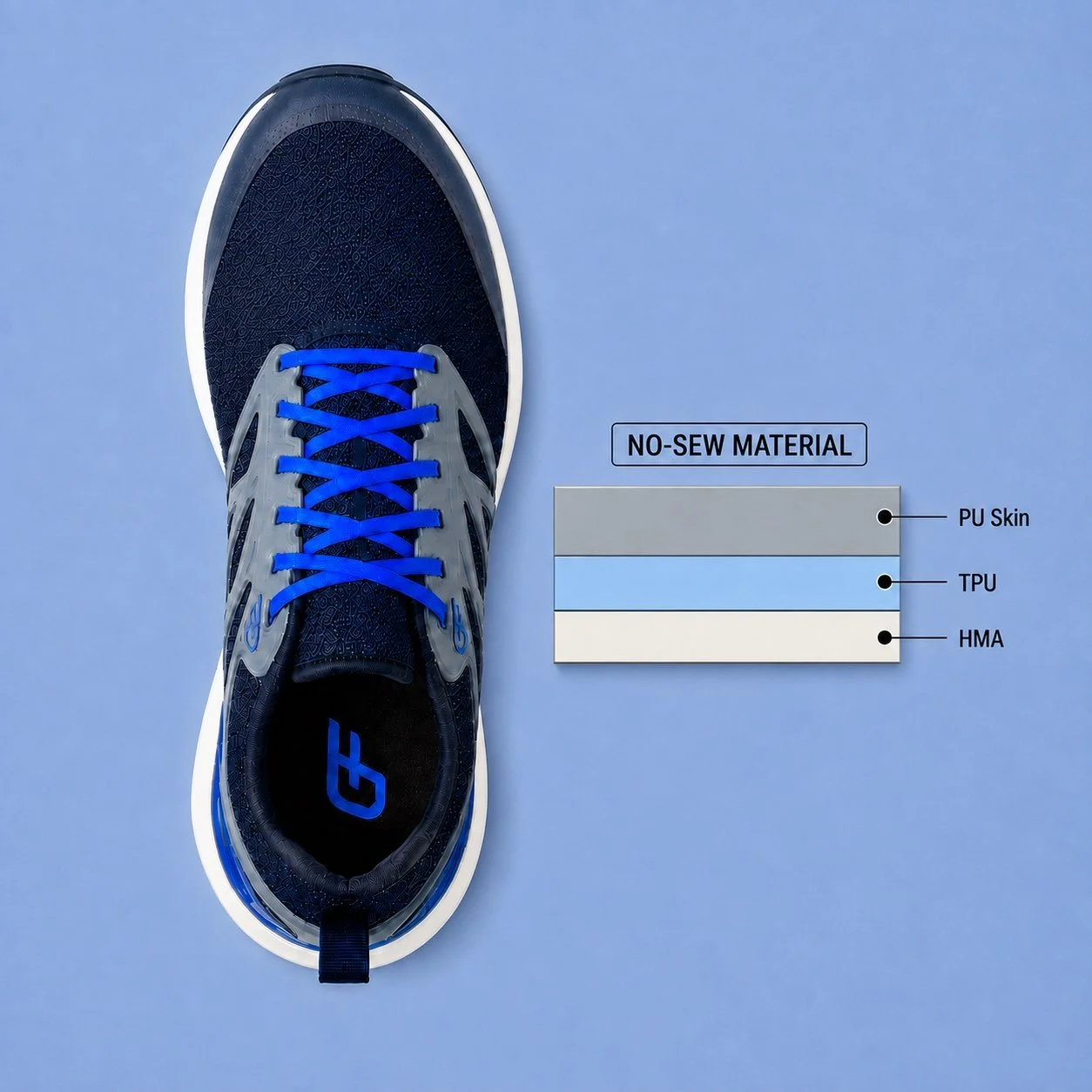
One important trend in modern footwear manufacturing is the reduction of traditional stitching. Instead of sewing every layer together, manufacturers can use heat-activated films and bonding technologies to laminate multiple materials. This is commonly called no-sew or seamless bonding.
TPU-based films and adhesives can support this manufacturing approach by helping bond textile and synthetic materials while maintaining flexibility. Potential benefits include cleaner shoe designs, reduced stitching, more design freedom, improved production consistency, simplified assembly, and lightweight construction.
However, successful no-sew bonding requires the correct combination of material, substrate, temperature, pressure, and processing time. There is no universal adhesive solution for every footwear construction.
TPU for Performance and Athletic Footwear
Athletic footwear places particularly high demands on materials. A single shoe may need flexibility in one area, structural support in another, high abrasion resistance on ground-contact surfaces, and lightweight comfort across the overall construction.
- Flexibility: the shoe needs to move naturally with the foot.
- Support: certain areas require structural stability.
- Abrasion resistance: ground-contact components must withstand repeated wear.
- Lightweight design: reducing unnecessary weight can improve comfort and performance.
- Durability: materials must survive repeated bending, stretching, impact, heat, and moisture.
Because TPU formulations can be adjusted for different performance requirements, TPU can be used across multiple parts of athletic footwear rather than being limited to one component.
Injection Molding TPU for Footwear
Injection molding is one of the most important TPU processing methods for footwear components. TPU pellets are heated, melted, injected into a mold, and cooled into the required shape.
This process offers several manufacturing advantages:
- High production efficiency
- Consistent part geometry
- Complex design possibilities
- Scalable mass production
- Good repeatability
However, processing performance depends heavily on the TPU grade. Important factors include melt flow behavior, processing temperature, mold temperature, injection pressure, cooling conditions, material moisture, and part geometry. For this reason, selecting TPU based only on Shore hardness is rarely enough.
What Should Footwear Manufacturers Consider When Choosing TPU?
Selecting the right TPU starts with understanding the final product and the real production process. Before recommending a material, several questions should be considered.
- What is the application? Is the TPU being used for an outsole, molded component, film, adhesive, logo, or reinforcement layer?
- What processing method will be used? Injection molding, extrusion, film processing, lamination, hot-melt bonding, or another process?
- What hardness is required? Different footwear components may require very different hardness ranges.
- What mechanical performance is required? Consider abrasion resistance, tensile strength, elongation, tear resistance, and repeated flexing.
- What materials need to be bonded? For adhesive applications, substrate compatibility is critical. Different textiles, synthetic leathers, TPU films, rubber, EVA, PU, and other materials may require different bonding conditions.
- What are the production conditions? Temperature, pressure, processing speed, open time, cycle time, and drying conditions can all influence material performance.
TPU Is More Than Just a Shoe Material
For footwear manufacturers, choosing TPU should not simply be a matter of selecting a resin from a data sheet. The real question is: how will the material perform in the customer's actual production process and final shoe construction?
A TPU with excellent laboratory properties may still create problems if it does not match the processing equipment, bonding conditions, substrate, or production cycle. This is why application development and material selection should work together.
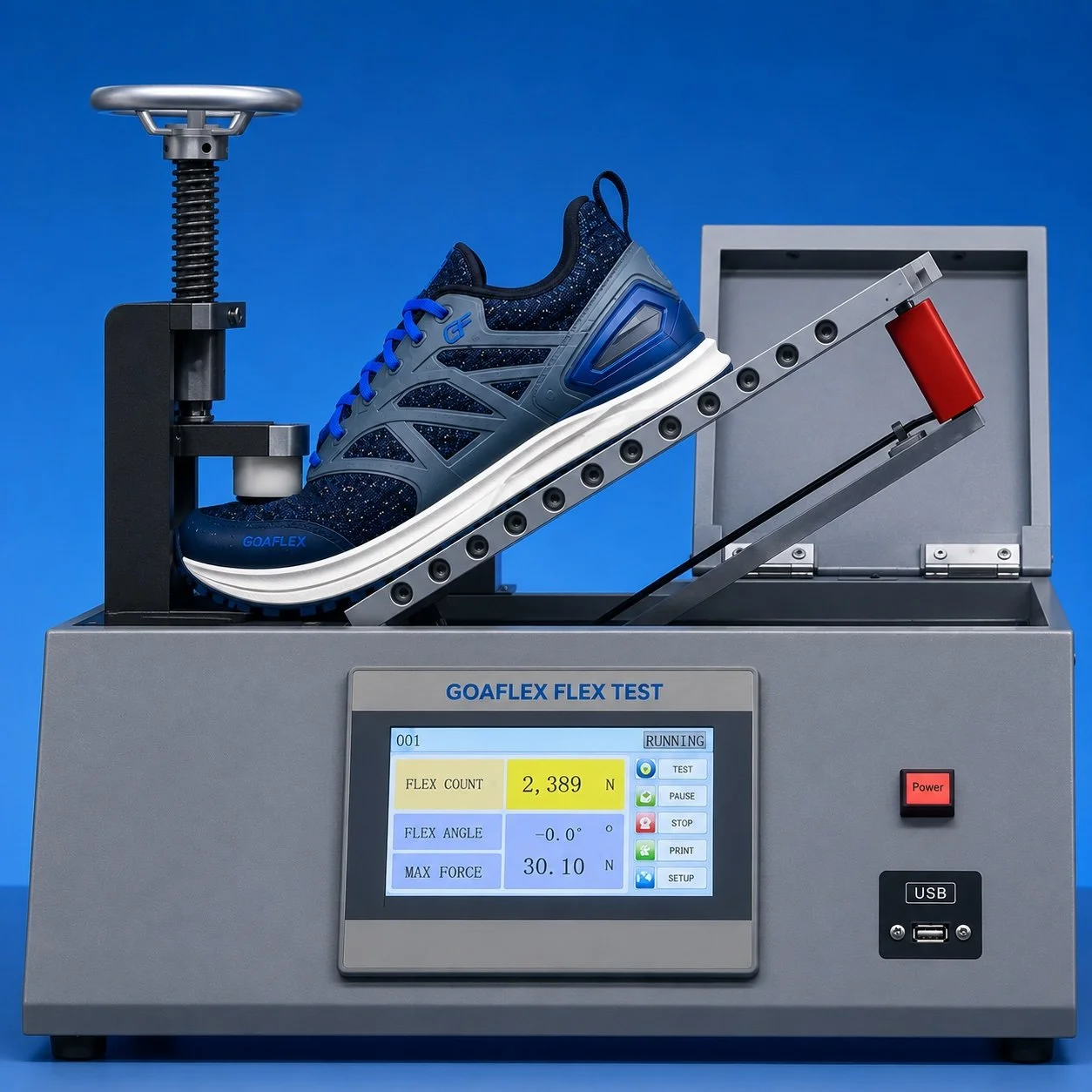
GOAFLEX TPU Solutions for Footwear
GOAFLEX develops high-performance TPU materials for footwear and related applications. Our solutions include TPU technologies for:
- Injection molding: for outsoles, structural parts, decorative parts, and other molded footwear components.
- Extrusion and films: for flexible films, functional layers, reinforcement, and footwear applications.
- Hot-melt adhesive solutions: for lamination, no-sew bonding, and footwear assembly.
- Specialized TPU development: for applications requiring specific hardness, bonding behavior, mechanical properties, or processing characteristics.
Our approach is not simply to sell a TPU grade. We work to understand the customer's application, process, and performance requirements before identifying the appropriate material direction.
Looking for TPU for Your Next Footwear Project?
Whether you are developing a new shoe, evaluating a new outsole material, improving a bonding process, or looking for a TPU film solution, material selection should start with the application.
Tell GOAFLEX what you are making, how you are processing it, and what performance you need. Our team can help evaluate the appropriate TPU solution for your footwear application.
Explore GOAFLEX TPU footwear solutions →
GOAFLEX — High-performance TPU solutions for modern footwear manufacturing.
